Joint meeting of the Manchester Medieval Society and Manchester Centre for Anglo-Saxon Studies
Thursday 23rd April 2015, 6pm
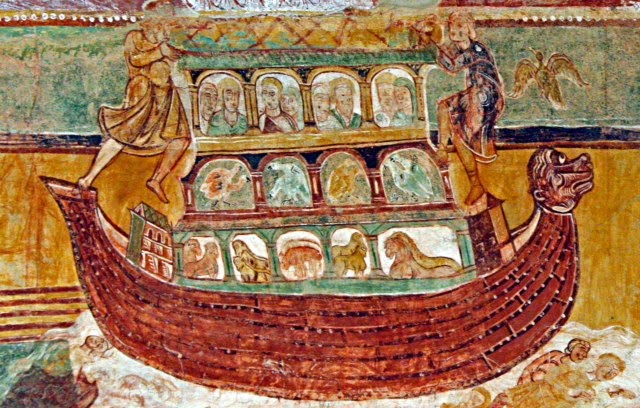
Noah’s Ark in the Earlier Middle Ages
Professor Brigitte Resl
Dean of Faculty of Arts and Social Sciences
University of Hull
Venue: John Rylands Library, Deansgate
Non-Members are always welcome.
Showing posts with label religion. Show all posts
Tuesday, 21 April 2015
Friday, 13 June 2014
CFP: 'Profitable and spedful to use': Medieval and Early Modern Prayer
A Postgraduate Conference
Friday 19th September 2014, Cardiff University
Generously funded by Cardiff University Graduate College, this one-day conference will address the theme of prayer in the Medieval and Early Modern periods. Given its pervasive nature as an element of Medieval and Early Modern culture, prayer is often overlooked by scholars as a discrete topic of enquiry. Prayer’s very ubiquity in the literature, historical record and material culture of the time has led, perhaps counterintuitively, to a lack of sustained critical attention, at least in some disciplines. In the context of a religiously-literate society, prayer performs many functions beyond its role in worship, with its artistic, rhetorical and performative aspects often used for propagandistic, interrogative or subversive means, among others.
The topic of prayer has of late gained momentum amongst Early Modern scholars, but in Medieval Studies it is only just beginning to emerge as a field of enquiry. This conference aims to bring together researchers in this up-and-coming area. This theme is, by its nature, interdisciplinary, encompassing literature, history and religion, and we are seeking to reflect this interdisciplinarity throughout the day’s events. By inviting speakers from these, and related, disciplines, we hope that the day will offer a broad and rich insight into Medieval and Early Modern prayer.
We are delighted to announce that Dr Alastair Bennett (Royal Holloway, University of London) will be giving a keynote lecture.
We invite papers from researchers in the fields of archaeology, architecture, art history, history, language, literature, music, philosophy, politics, religion, and other relevant disciplines to submit abstracts of 300 words. Topics can include:
- Literary prayer
- Theory of prayer
- Prayer in liturgy
- Prayer and music
- Prayer and Biblical translation
- Prayer and rhetoric
- Prayer and violence
- Language of prayer
- Prayer as protest
- Prayer manuals
- Prayer books
- Prayer and politics
- Teaching on prayer
- Private devotion
- Prayer as magic
- Physical manifestations of prayer (e.g. objects, buildings, art, etc.)
- Any other related topic
Please send abstracts for papers of 20 minutes by the 9th of July 2014 to Judith Dray and Sheri Smith.
Friday 19th September 2014, Cardiff University
Generously funded by Cardiff University Graduate College, this one-day conference will address the theme of prayer in the Medieval and Early Modern periods. Given its pervasive nature as an element of Medieval and Early Modern culture, prayer is often overlooked by scholars as a discrete topic of enquiry. Prayer’s very ubiquity in the literature, historical record and material culture of the time has led, perhaps counterintuitively, to a lack of sustained critical attention, at least in some disciplines. In the context of a religiously-literate society, prayer performs many functions beyond its role in worship, with its artistic, rhetorical and performative aspects often used for propagandistic, interrogative or subversive means, among others.
The topic of prayer has of late gained momentum amongst Early Modern scholars, but in Medieval Studies it is only just beginning to emerge as a field of enquiry. This conference aims to bring together researchers in this up-and-coming area. This theme is, by its nature, interdisciplinary, encompassing literature, history and religion, and we are seeking to reflect this interdisciplinarity throughout the day’s events. By inviting speakers from these, and related, disciplines, we hope that the day will offer a broad and rich insight into Medieval and Early Modern prayer.
We are delighted to announce that Dr Alastair Bennett (Royal Holloway, University of London) will be giving a keynote lecture.
We invite papers from researchers in the fields of archaeology, architecture, art history, history, language, literature, music, philosophy, politics, religion, and other relevant disciplines to submit abstracts of 300 words. Topics can include:
- Literary prayer
- Theory of prayer
- Prayer in liturgy
- Prayer and music
- Prayer and Biblical translation
- Prayer and rhetoric
- Prayer and violence
- Language of prayer
- Prayer as protest
- Prayer manuals
- Prayer books
- Prayer and politics
- Teaching on prayer
- Private devotion
- Prayer as magic
- Physical manifestations of prayer (e.g. objects, buildings, art, etc.)
- Any other related topic
Please send abstracts for papers of 20 minutes by the 9th of July 2014 to Judith Dray and Sheri Smith.
Labels:
Cardiff University,
CFP,
conference,
early modern,
postgraduate,
prayer,
religion
Tuesday, 30 July 2013
CFP: Religious Men in the Middle Ages: Networks and Communities
3-5 July 2014
University of Lincoln, UK
Call for Papers
This conference seeks to explore and re-evaluate the forms and functions of networks and communities for men in the middle ages. We invite papers which consider these in relation to professed religious men and/or laymen of any faith. Scholars are increasingly engaging with what religion, belief and devotion meant to men as men. Networks and communities both shape and express individual, relational, and collective identities, and therefore shed useful light on the experiences, perceptions or depiction of medieval men. This is the second conference under the auspices of The Bishop’s Eye Network – a research network between the Universities of Huddersfield and Lincoln. The first, ‘Religious Men in the Middle Ages’, was held at Huddersfield in 2012.
We invite abstracts from scholars at all career stages working on the interplay between men in networks and communities; how they are constituted and what they mean. Papers may focus on homosocial networks and communities or male involvement in female networks and communities.
Topics for discussion could include networks and communities defined by:
- Family and kinship
- Intellectual connections (e.g. textual communities, scholasticism)
- Profession and Occupation
- Orders, universities, monastic, mendicant, and secular houses
- Patronage and affinity
- Geography and location
- Guilds and confraternities
- Military experience (e.g. comitati, warbands, orders of chivalry)
- Friendship and emotional bonds (e.g. amicitia, love)
- Ethnicity and inter-cultural encounters
Papers could consider individuals or groups from any faith, religious tradition, monotheistic, pagan, or heretical, or could focus on men who rejected religion and faith. We encourage proposals from scholars working in any relevant field: history, literature and language, art history, musicology, archaeology, etc., and from any medieval period (c. 300–early 1500s) or geographical setting.
The conference will be held at the Brayford Campus, which is a few minutes’ walk from the train station, and within easy reach of the cathedral and castle. The conference organisers are Dr Philippa Hoskin and Dr Joanna Huntington. For further information on Lincoln please click here (a conference website is under construction).
We hope to publish a volume of essays based on a selection of the papers delivered at the conference.
Proposals, of 200-300 words, for papers of 20 minutes, should be submitted to the conference convenors by 30 September 2013.
University of Lincoln, UK
Call for Papers
This conference seeks to explore and re-evaluate the forms and functions of networks and communities for men in the middle ages. We invite papers which consider these in relation to professed religious men and/or laymen of any faith. Scholars are increasingly engaging with what religion, belief and devotion meant to men as men. Networks and communities both shape and express individual, relational, and collective identities, and therefore shed useful light on the experiences, perceptions or depiction of medieval men. This is the second conference under the auspices of The Bishop’s Eye Network – a research network between the Universities of Huddersfield and Lincoln. The first, ‘Religious Men in the Middle Ages’, was held at Huddersfield in 2012.
We invite abstracts from scholars at all career stages working on the interplay between men in networks and communities; how they are constituted and what they mean. Papers may focus on homosocial networks and communities or male involvement in female networks and communities.
Topics for discussion could include networks and communities defined by:
- Family and kinship
- Intellectual connections (e.g. textual communities, scholasticism)
- Profession and Occupation
- Orders, universities, monastic, mendicant, and secular houses
- Patronage and affinity
- Geography and location
- Guilds and confraternities
- Military experience (e.g. comitati, warbands, orders of chivalry)
- Friendship and emotional bonds (e.g. amicitia, love)
- Ethnicity and inter-cultural encounters
Papers could consider individuals or groups from any faith, religious tradition, monotheistic, pagan, or heretical, or could focus on men who rejected religion and faith. We encourage proposals from scholars working in any relevant field: history, literature and language, art history, musicology, archaeology, etc., and from any medieval period (c. 300–early 1500s) or geographical setting.
The conference will be held at the Brayford Campus, which is a few minutes’ walk from the train station, and within easy reach of the cathedral and castle. The conference organisers are Dr Philippa Hoskin and Dr Joanna Huntington. For further information on Lincoln please click here (a conference website is under construction).
We hope to publish a volume of essays based on a selection of the papers delivered at the conference.
Proposals, of 200-300 words, for papers of 20 minutes, should be submitted to the conference convenors by 30 September 2013.
Labels:
CFP,
conference,
gender,
religion,
University of Lincoln
Thursday, 22 November 2012
CFP: Psalm Culture and the Politics of Translation
Charterhouse Square, QMUL, London
15-17 July 2013
We invite paper and session proposals for an interdisciplinary conference on English responses to the Psalms, from the Anglo-Saxon period to the Civil War. Keynote addresses to be given by Daniel Anlezark (Sydney), Brian Cummings (Sussex), Vincent Gillespie (Oxford), Hannibal Hamlin (Ohio State), James Simpson (Harvard) and Eric Stanley (Oxford).
The Psalms have been at the centre of English religious life, language and identity since the Augustinian mission. This conference aims to bring together scholars working in different periods and disciplines to open up new avenues of discussion and debate. We are interested in all aspects of the English Psalm tradition, from the conversion to the Civil War, and possible areas of exploration might include:
■The authority of the vernacular, and the controversy of translation
■Specific contexts for translation (monastic production, translations by prisoners, etc.)
■Psalms as political commentary
■Musical settings of Psalms, on the page and in performance
■Psalm books as physical objects and works of art
■Iconography
■Ecclesiastical and private devotion
■Psalms and the formation of an English literary canon
■Literary borrowings and intertextuality
■Reading, annotating and glossing
■Comparative analysis of individual Psalms across languages and periods
■The Psalms as a site of inter-cultural dialogue (between faiths, between countries)
We welcome proposals for papers (no more than 20 minutes) and panels (of 3 papers) from both established scholars and graduate students. It is envisaged that selected papers will be considered for publication in an edited, peer-reviewed collection.
Please submit all proposals and correspondence via the website or email the conference convenors.
Deadline for proposals: 1st December 2012
Organisers: Ruth Ahnert (QMUL), Tamara Atkin (QMUL), Francis Leneghan (Oxford)
15-17 July 2013
We invite paper and session proposals for an interdisciplinary conference on English responses to the Psalms, from the Anglo-Saxon period to the Civil War. Keynote addresses to be given by Daniel Anlezark (Sydney), Brian Cummings (Sussex), Vincent Gillespie (Oxford), Hannibal Hamlin (Ohio State), James Simpson (Harvard) and Eric Stanley (Oxford).
The Psalms have been at the centre of English religious life, language and identity since the Augustinian mission. This conference aims to bring together scholars working in different periods and disciplines to open up new avenues of discussion and debate. We are interested in all aspects of the English Psalm tradition, from the conversion to the Civil War, and possible areas of exploration might include:
■The authority of the vernacular, and the controversy of translation
■Specific contexts for translation (monastic production, translations by prisoners, etc.)
■Psalms as political commentary
■Musical settings of Psalms, on the page and in performance
■Psalm books as physical objects and works of art
■Iconography
■Ecclesiastical and private devotion
■Psalms and the formation of an English literary canon
■Literary borrowings and intertextuality
■Reading, annotating and glossing
■Comparative analysis of individual Psalms across languages and periods
■The Psalms as a site of inter-cultural dialogue (between faiths, between countries)
We welcome proposals for papers (no more than 20 minutes) and panels (of 3 papers) from both established scholars and graduate students. It is envisaged that selected papers will be considered for publication in an edited, peer-reviewed collection.
Please submit all proposals and correspondence via the website or email the conference convenors.
Deadline for proposals: 1st December 2012
Organisers: Ruth Ahnert (QMUL), Tamara Atkin (QMUL), Francis Leneghan (Oxford)
Wednesday, 5 September 2012
CFP: Sensing the Sacred: Religion and the Senses, 1300-1800
The University of York
21-22 June 2013
Confirmed keynote addresses from:
Nicky Hallett (University of Sheffield)
Matthew Milner (McGill University)
& Chris Woolgar (University of Southampton)
Religion has always been characterised as much by embodied experience as by abstract theological dispute. From the sounds of the adhān (the Islamic call to prayer), to the smell of incense in the Hindu Pūjā (a ritual offering to the deities), the visual emblem of the cross in the Christian tradition, and the ascetic practices of Theravada Buddhism, sensation is integral to a range of devotional practices. At the same time, the history of many faiths is characterised by an intense suspicion of the senses and the pleasures they offer.
This international, interdisciplinary conference, to be held at the University of York from 21 to 22 June 2013, will bring together scholars working on the role played by the senses in the experience and expression of religion and faith in the pre-modern world. The burgeoning field of sensory history offers a fertile ground for reconsideration of religious studies across disciplinary boundaries. We welcome papers from anthropologists, archaeologists, art historians, historians, literary scholars, musicologists, philosophers, theologians, and any other interested parties. Possible topics might include, but are by no means limited to:
- Synaesthesia: how do religious rituals blur sensory boundaries, and challenge sensory hierarchies?
- Iconography and iconoclasm: how might we conceive the ‘rites of violence’ in sensory terms? How does iconography engage the non-visual senses?
- The senses and conversion: how are the senses used to elicit conversion?
- Material cultures of religion: what role do the senses play in mediating between bodies and sacred objects?
- The senses and gender: are sensing practices gender specific?
- The inner (spiritual) senses: how do they relate to the external (bodily) senses?
- Sensory environments: to what extent do environments shape devotional practices and beliefs, and vice versa? How do we use our senses to orient ourselves in space?
- Affect: what role do the senses play in the inculcation of religious affect?
Proposals (max. 300 words) for papers of 20 minutes are welcomed both from established scholars, and from postgraduate students. Applications from panels of three speakers are encouraged, as well as individual proposals.
They should be sent to conference organisers Robin Macdonald, Emilie Murphy, and Elizabeth Swann by 6pm on 5 November 2012.
21-22 June 2013
Confirmed keynote addresses from:
Nicky Hallett (University of Sheffield)
Matthew Milner (McGill University)
& Chris Woolgar (University of Southampton)
Religion has always been characterised as much by embodied experience as by abstract theological dispute. From the sounds of the adhān (the Islamic call to prayer), to the smell of incense in the Hindu Pūjā (a ritual offering to the deities), the visual emblem of the cross in the Christian tradition, and the ascetic practices of Theravada Buddhism, sensation is integral to a range of devotional practices. At the same time, the history of many faiths is characterised by an intense suspicion of the senses and the pleasures they offer.
This international, interdisciplinary conference, to be held at the University of York from 21 to 22 June 2013, will bring together scholars working on the role played by the senses in the experience and expression of religion and faith in the pre-modern world. The burgeoning field of sensory history offers a fertile ground for reconsideration of religious studies across disciplinary boundaries. We welcome papers from anthropologists, archaeologists, art historians, historians, literary scholars, musicologists, philosophers, theologians, and any other interested parties. Possible topics might include, but are by no means limited to:
- Synaesthesia: how do religious rituals blur sensory boundaries, and challenge sensory hierarchies?
- Iconography and iconoclasm: how might we conceive the ‘rites of violence’ in sensory terms? How does iconography engage the non-visual senses?
- The senses and conversion: how are the senses used to elicit conversion?
- Material cultures of religion: what role do the senses play in mediating between bodies and sacred objects?
- The senses and gender: are sensing practices gender specific?
- The inner (spiritual) senses: how do they relate to the external (bodily) senses?
- Sensory environments: to what extent do environments shape devotional practices and beliefs, and vice versa? How do we use our senses to orient ourselves in space?
- Affect: what role do the senses play in the inculcation of religious affect?
Proposals (max. 300 words) for papers of 20 minutes are welcomed both from established scholars, and from postgraduate students. Applications from panels of three speakers are encouraged, as well as individual proposals.
They should be sent to conference organisers Robin Macdonald, Emilie Murphy, and Elizabeth Swann by 6pm on 5 November 2012.
Wednesday, 1 August 2012
Conference Review: Religious Men in the Middle Ages
University of Huddersfield, 6-8 July 2012
by Dr. Hannah Priest
At the beginning of July, I attended the Religious Men in the Middle Ages conference at the University of Huddersfield. This conference was an interdisciplinary exploration of the intersection of masculinities and religious identities, across the entirety of the Middle Ages.
The conference began with the first of three plenary sessions: Professor Michael L. Satlow (Brown University) speaking on ‘Antique and Early Medieval Rabbinic Thought on Constructions of Masculinity and Religiosity with Particular Reference to Torah Study’. Satlow explored the representations of religious masculinity in Rabbinic thought, particularly as relates to hegemonic discourses of masculinity and desire. Using ancient and early medieval examples, he argued that the evident shift from the metaphor of Torah study as the ‘salve’ or ‘cure’ for desire to the martial imagery of ‘conquest’ and ‘domination’ of desire created a discourse of masculinity that, though it differed from hegemonic discourse, did not oppose it. Satlow’s engaging and informative address set the tone for the conference to come – the definitions of ‘religious’, ‘men’ and ‘Middle Ages’ were to be broad, but also understood with close attention to specifics and contexts.
My own paper – ‘Intersections of Christological Devotion and Romance Masculinity’ – was in the first of the parallel sessions that followed the coffee break. The panel I was in was entitled ‘Christocentric Piety’, and also included Matthew Hoskin (University of Edinburgh) – speaking on ‘The Close Proximity of Christ to the Male Monk in John of Ephesus’ Lives of Eastern Saints’ – and Carolyn Muir (University of Hong Kong) – ‘Bride/Bridegroom Revisited: Further Thoughts on Men and Mystic Marriage’. Both Hoskin and Muir gave fascinating papers, and I was glad to be first in the session so I could devote my full attention to my co-presenters. Hoskin’s paper struck a good balance of depth and accessibility, which was good for those of us less familiar with the Eastern traditions. Muir spoke on various presentations of John the Evangelist as ‘bride of Christ’, and was illustrated with both visual and textual examples. That our panel spanned literary, historical and art historical perspectives, with some good discussions and parallels drawn, indicates the interdisciplinary nature of the conference as a whole.
Highlights of the first day also included, for me, papers by Lisa Kranzer (University of Birmingham) and Sarah Bastow (University of Huddersfield) discussing self-perception, writing and exile during the Reformation. It is still somewhat unusual to get papers on Reformation writings at a self-styled ‘medieval’ conference, but Kranzer and Bastow’s contributions allowed for a consideration of periodization and cultural shift, while also highlighting the continuity of certain (gendered) constructions of identity.
So, the first day began with a discussion of ancient Rabbinic thought, and ended with papers on Elizabethan Protestant reform.
The second day was equally diverse. I attended papers on male devotional practice, demonstrations of personal faith by warriors, pastoral responsibilities of laymen in the late Middle Ages, seventh-century Eastern traditions of the monk as mourner, male tears in the fourteenth century, Jewish bans on polygamy, Henry of Huntingdon, Hereward the Wake, and the Buddha Gautama. All the papers were of a very high standard, it is difficult to choose ‘highlights’ from a consistently strong programme. However, I was very taken by James MacGregor (Georgetown University)’s ‘Dude Prays Like a Lady? Varieties of Male Devotion to Saint George in Late Medieval England’ and Hannah Hunt’s ‘The Monk as Mourner: Eastern Christian Self-Identity in the Seventh Century’ – the former, because it spoke clearly to my own work on chivalric and martial masculinity in late medieval literature; the latter, because it was so far removed from my own research that it served as an engaging and enlightening introduction to something almost entirely new to me.
The second plenary of the conference, in the late morning session of the 7th July, was Professor James Clark (University of Bristol), speaking on ‘The Attractions of the Monastic Life for English Men Between the Black Death and the Reformation’. Drawing on Steve Rigby’s argument that there was a 30% increase in the number of men living in monastic houses in 1500 as compared to 1400, Clark explored the numerous reasons ‘why men became monks’. He argued that the number of dispensations sought at this time to ordain young men below the canonical age suggests that there was a ‘ready supply of young men’ seeking to swell the numbers of older monastic houses; this, Clark asserted, may well mean that the ‘last’ monks of medieval England were also, in many ways, the youngest generation of monks for some time. The main body of Clark’s lecture, however, was concerned with the reasons for this shift, and he explored the idea of monastic ‘career progression’ in depth, as well as the potential for establishing social capital exploited by merchant families entering their sons into monastic houses. Clark’s argument was compelling, and went a long way to dispelling some of the myths of the decay and decrepitude of the decades leading to the dissolution of the monasteries.
The final half-day of the conference offered parallel sessions, followed by the third plenary. The session I attended first had papers from Emma Wells (University of Durham), Marita von Weissenberg (Yale University) and Andrew Fleming (University of Oxford), who spoke on the experience of royal pilgrimage in the late Middle Ages, married male saints (also in the later Middle Ages) and Thomas of Cantilupe respectively. The papers worked well together, and led to some interesting discussions in the question sessions afterwards.
To end the conference, there was a plenary session with Dr. Jennifer Thibodeaux (University of Wisconsin-Whitewater) speaking on ‘The Discourse of Clerical Masculinity: Masculinity and Sexuality in the Writings of Norman Clerics’. Thibodeaux’s paper focussed on the Anglo-Norman pro-clerical marriage tracts that appeared after the First and Second Lateran Councils’ voiding and banning of clerical marriage. With close readings of particular tracts, Thibodeaux argued that the writers drew on certain Pauline writings on marriage to suggest that disorder would necessarily follow a ban on clerical marriage. She went on to illustrate some of the ways in which these tract writers negated the reformed new model of masculinity (based in celibacy) by relying on a ‘householder model’ of the male as husband and father. While, as Thibodeaux pointed out, these tracts were localized both geographically and temporally, this final plenary offered a thought-provoking interrogation of a ‘battle’ for religious masculinity that is often overlooked.
In conclusion, I would offer a warm congratulations to the conference organizers (Dr. Pat Cullum and Dr. Katherine J. Lewis) for putting together such a full and stimulating programme. I know they are in the process of putting together an edited collection based on the conference, and I will look forward to seeing this.
by Dr. Hannah Priest
At the beginning of July, I attended the Religious Men in the Middle Ages conference at the University of Huddersfield. This conference was an interdisciplinary exploration of the intersection of masculinities and religious identities, across the entirety of the Middle Ages.
The conference began with the first of three plenary sessions: Professor Michael L. Satlow (Brown University) speaking on ‘Antique and Early Medieval Rabbinic Thought on Constructions of Masculinity and Religiosity with Particular Reference to Torah Study’. Satlow explored the representations of religious masculinity in Rabbinic thought, particularly as relates to hegemonic discourses of masculinity and desire. Using ancient and early medieval examples, he argued that the evident shift from the metaphor of Torah study as the ‘salve’ or ‘cure’ for desire to the martial imagery of ‘conquest’ and ‘domination’ of desire created a discourse of masculinity that, though it differed from hegemonic discourse, did not oppose it. Satlow’s engaging and informative address set the tone for the conference to come – the definitions of ‘religious’, ‘men’ and ‘Middle Ages’ were to be broad, but also understood with close attention to specifics and contexts.
My own paper – ‘Intersections of Christological Devotion and Romance Masculinity’ – was in the first of the parallel sessions that followed the coffee break. The panel I was in was entitled ‘Christocentric Piety’, and also included Matthew Hoskin (University of Edinburgh) – speaking on ‘The Close Proximity of Christ to the Male Monk in John of Ephesus’ Lives of Eastern Saints’ – and Carolyn Muir (University of Hong Kong) – ‘Bride/Bridegroom Revisited: Further Thoughts on Men and Mystic Marriage’. Both Hoskin and Muir gave fascinating papers, and I was glad to be first in the session so I could devote my full attention to my co-presenters. Hoskin’s paper struck a good balance of depth and accessibility, which was good for those of us less familiar with the Eastern traditions. Muir spoke on various presentations of John the Evangelist as ‘bride of Christ’, and was illustrated with both visual and textual examples. That our panel spanned literary, historical and art historical perspectives, with some good discussions and parallels drawn, indicates the interdisciplinary nature of the conference as a whole.
Highlights of the first day also included, for me, papers by Lisa Kranzer (University of Birmingham) and Sarah Bastow (University of Huddersfield) discussing self-perception, writing and exile during the Reformation. It is still somewhat unusual to get papers on Reformation writings at a self-styled ‘medieval’ conference, but Kranzer and Bastow’s contributions allowed for a consideration of periodization and cultural shift, while also highlighting the continuity of certain (gendered) constructions of identity.
So, the first day began with a discussion of ancient Rabbinic thought, and ended with papers on Elizabethan Protestant reform.
The second day was equally diverse. I attended papers on male devotional practice, demonstrations of personal faith by warriors, pastoral responsibilities of laymen in the late Middle Ages, seventh-century Eastern traditions of the monk as mourner, male tears in the fourteenth century, Jewish bans on polygamy, Henry of Huntingdon, Hereward the Wake, and the Buddha Gautama. All the papers were of a very high standard, it is difficult to choose ‘highlights’ from a consistently strong programme. However, I was very taken by James MacGregor (Georgetown University)’s ‘Dude Prays Like a Lady? Varieties of Male Devotion to Saint George in Late Medieval England’ and Hannah Hunt’s ‘The Monk as Mourner: Eastern Christian Self-Identity in the Seventh Century’ – the former, because it spoke clearly to my own work on chivalric and martial masculinity in late medieval literature; the latter, because it was so far removed from my own research that it served as an engaging and enlightening introduction to something almost entirely new to me.
The second plenary of the conference, in the late morning session of the 7th July, was Professor James Clark (University of Bristol), speaking on ‘The Attractions of the Monastic Life for English Men Between the Black Death and the Reformation’. Drawing on Steve Rigby’s argument that there was a 30% increase in the number of men living in monastic houses in 1500 as compared to 1400, Clark explored the numerous reasons ‘why men became monks’. He argued that the number of dispensations sought at this time to ordain young men below the canonical age suggests that there was a ‘ready supply of young men’ seeking to swell the numbers of older monastic houses; this, Clark asserted, may well mean that the ‘last’ monks of medieval England were also, in many ways, the youngest generation of monks for some time. The main body of Clark’s lecture, however, was concerned with the reasons for this shift, and he explored the idea of monastic ‘career progression’ in depth, as well as the potential for establishing social capital exploited by merchant families entering their sons into monastic houses. Clark’s argument was compelling, and went a long way to dispelling some of the myths of the decay and decrepitude of the decades leading to the dissolution of the monasteries.
The final half-day of the conference offered parallel sessions, followed by the third plenary. The session I attended first had papers from Emma Wells (University of Durham), Marita von Weissenberg (Yale University) and Andrew Fleming (University of Oxford), who spoke on the experience of royal pilgrimage in the late Middle Ages, married male saints (also in the later Middle Ages) and Thomas of Cantilupe respectively. The papers worked well together, and led to some interesting discussions in the question sessions afterwards.
To end the conference, there was a plenary session with Dr. Jennifer Thibodeaux (University of Wisconsin-Whitewater) speaking on ‘The Discourse of Clerical Masculinity: Masculinity and Sexuality in the Writings of Norman Clerics’. Thibodeaux’s paper focussed on the Anglo-Norman pro-clerical marriage tracts that appeared after the First and Second Lateran Councils’ voiding and banning of clerical marriage. With close readings of particular tracts, Thibodeaux argued that the writers drew on certain Pauline writings on marriage to suggest that disorder would necessarily follow a ban on clerical marriage. She went on to illustrate some of the ways in which these tract writers negated the reformed new model of masculinity (based in celibacy) by relying on a ‘householder model’ of the male as husband and father. While, as Thibodeaux pointed out, these tracts were localized both geographically and temporally, this final plenary offered a thought-provoking interrogation of a ‘battle’ for religious masculinity that is often overlooked.
In conclusion, I would offer a warm congratulations to the conference organizers (Dr. Pat Cullum and Dr. Katherine J. Lewis) for putting together such a full and stimulating programme. I know they are in the process of putting together an edited collection based on the conference, and I will look forward to seeing this.
Subscribe to:
Posts (Atom)

