Showing posts with label John Rylands Deansgate. Show all posts

Saturday, 25 November 2017

Upcoming Event: Professor Gale-Owen Crocker Christmas Lecture

'Deck the hall' Anglo-Saxon Style

Professor Emerita Gale Owen-Crocker (University of Manchester)


Date: Thursday 7 December 2017
Time: 6pm
Venue: Christie Room, John Rylands Library, Deansgate

Members - free; Non-members - £5 (waged)/£2 (unwaged)

Thursday, 20 April 2017

Upcoming Event: Professor Andrew Breeze Lecture


The Northern Arthur and the Volcanic Winter of 536-37
Professor Andrew Breeze (University of Navarra)

Joint meeting of Manchester Medieval Society and the Manchester Centre for Anglo Saxon Studies (MANCASS). Non-members welcome.

Date: Thursday 27 April 2017
Time: 6 p.m.
Venue: John Rylands Library, Deansgate, Manchester
Attendance: Free

There will be a dinner with the speaker following this talk. If you would like to attend, please email our treasurer Dr Hannah Priest to book a place.

Friday, 10 February 2017

Upcoming Event: JRRI Medieval and Early Modern Research Seminar Series

Event information from the John Rylands Research Institute...

 Quantifying Caxton – Taking a Digital Approach to Historical Spelling Variation


Rosie Shute (University of Sheffield)
Thursday 9 March, 5.30pm
Christie Room, John Rylands Library Deansgate

‘Logic, Rhetoric, Arithmetic’ in Myrrour of the Worlde (Westminster: William Caxton, 1480)
Rylands 3469, c4v-c5r ©The University of Manchester

William Caxton (c. 1422-91) began printing in England in 1476, publishing over one hundred texts throughout his lifetime. We tend to think that Caxton's texts represent Caxton's language; however this talk demonstrates the influence of the type-setter on the language of Caxton's printed work, focusing on spelling in particular and drawing on methods from mathematics, computer science, and the history of the book.

Free event. All welcome.

Wednesday, 23 November 2016

Upcoming Event: Anne Kirkham Lecture on 8 December

Detail from the title page in a printed Dutch Book of Hours (Antwerp: Adrien van Liesvelt, 1494)
John Rylands Library Special Collections 15464 © The University of Manchester

Hark the Herald… Angels in the John Rylands Library’s Books of Hours


A lecture for Manchester Medieval Society by Dr Anne Kirkham (Art History and Visual Studies, The University of Manchester)

Date: 8 December 2016
Time: 6 p.m.
Venue: John Rylands Library, Deansgate, Manchester
Attendance: Members - free; Non-members - £5 (waged)/£2 (unwaged)

There will be a dinner with the speaker following this talk. If you would like to attend, please email our treasurer Dr Hannah Priest to book a place.

Saturday, 1 October 2016

Upcoming Event: Kathryn M Rudy Lecture on 20 October

The Hague, KB, Ms 75 G 2, fol. 64v-65r: a very dirty manuscript

The Dirt and the Book: How Signs of Wear Reveal Handling of Prayer Books in the Middle Ages

with hands-on element

A lecture for Manchester Medieval Society by Dr Kathryn M. Rudy (Senior Lecturer in Art History, University of St Andrews)

Date: 20 October 2016
Time: 6 p.m.
Venue: John Rylands Library, Deansgate, Manchester
Attendance: Members - free; Non-members - £5 (waged)/£2 (unwaged)

Wednesday, 6 April 2016

Upcoming Events: Duncan Sayer Lecture on 14 April


Adventus Saxonum: Migration, DNA and Identity in the Early Middle Ages
2016 Joint Meeting of the Manchester Medieval Society and the Manchester Centre for Anglo Saxon Studies

Speaker: Dr Duncan Sayer (Reader in Archaeology, University of Central Lancashire)
Date: Thursday 14 April
Time: 6pm
Venue: John Rylands Library, Deansgate, Manchester

Attendance: Free

For more information, please contact the Manchester Medieval Society

Sunday, 20 March 2016

Craft in Medieval and Early Modern England

John Rylands Library, Deansgate
2 June 2016

This one-day conference will consider different ways in which the term ‘craft’ helps us to think through and articulate our approach to the medieval and early modern sources (in a range of media) that we work with. These, in turn, help us to think about the diverse possible manifestations and significations of the term ‘craft’ in premodern culture.

Keynote speakers:

Catherine E. Karkov (Leeds): ‘The Craft of Concealment’

Sarah Salih (King’s College, London): ‘Wondrous Pagan Crafts’

Speakers (University of Manchester):

Anke Bernau: ‘The Artificial Curiosity of Craft’
Catherine Casson: ‘Crafting Reputation: Strategies for Economic Success in English Medieval Towns’
Irene O’Daly: ‘Crafting Prayer: Rylands Latin MS 18 (Arbor Caritatis et Misericordiae) and the Art of Salvation’
James Paz: ‘The Craft of Wayland the Smith: Technology and Magic, Artifice and Deception’
Elaine Tierney: ‘Crafting the Ephemeral City: Sheds in Early Modern London’

Registration will open March 1st, 2016.

The programme will run between 10am-5pm.

Cost for the day:
(1) Including lunch: £15 / £10 concessions
(2) Excluding lunch: £10 / £5 concessions

For further information, contact either Dr Anke Bernau or Dr James Paz, or visit the event webpage.

Tuesday, 1 December 2015

Guest Post: Magic, Witches and Devils in the Persian Book of Kings

by Dr Stephen Gordon

Belief in devils and witches was a central feature of the medieval and early modern worlds. From Ars Moriendi texts that taught the dying how to avoid the clutches of the devil, to treatises on the machinations of witches, interactions with malign, evil entities were an accepted − if unwelcome − part of everyday life. While much has been written on the Occidental traditions of supernatural belief, it should also be noted that the Islamic world shared the same concerns about the agency of evil spirits. The epic Persian poem, the Shahnama, or ‘Book of Kings’, contained numerous stories involving magic, witches and demons. The historic John Rylands Library in Manchester is home to a fine selection of meticulously illustrated copies of the text.

Written between c.982−1010 CE by Abu’l Qasim Firdousi of Tus (‘Ferdowsi’, d. 1025CE), who took over the project from Abu Mansur Daqiqi (d. 976CE), the Shahnama charts the history of the Persian people from the beginning of the world to the fall of the Sasanian Empire (642CE). As well as being the longest poem ever written by a single author, the Shahnama is notable for the purity of its written Persian, with very few Arabic loan words included in the text. Structurally, it is divided into three main parts, the mythical, legendary, and historical eras, and covers the reigns of forty-seven kings and three queens. Almost two-thirds of the text is devoted to the legendary section of Iranian history, of which the adventures of the hero Rustam (see below) are given particular prominence. The Shahnama places great emphasis on the differences between good and bad kingship, providing moral lessons to entertain and edify its noble readership. Demons and witches – that is, evil incarnate – provided the ideal obstacles for ‘good’ kings and heroes to overcome. The increased commercialisation of manuscript production in the fifteenth and sixteenth centuries, focused mainly on the city of Shiraz, meant that the Ferdowsi’s masterpiece began to enjoy a much wider circulation, able to be read, copied and patronised by royal and non-royal audiences alike.

The storming of the castle of Bahman is one of the most visceral supernatural encounters recorded in the Shahnama. Following a long and eventful reign, the Shah Kay Kavus decided to abdicate his throne, but could not decide whether his successor should be his son, Fariburz, or grandson, Kay Khusraw. Thus he announced that whoever vanquished the demon-filled castle of Bahman would become the new ruler. Fariburz’s assault failed after the ground surrounding the castle magically burst into flames, forcing him to retreat. When Kay Khusraw approached the castle, he commanded one of his retainers, Giv, to attach a letter to the walls proclaiming the castle would fall to the rightful king. Almost immediately the ramparts began to crumble. Kay Khusraw wasted no time in ordering his archers to fire, killing many ‘Divs’ (demons) in the process. Those that weren’t killed in the initial onslaught died after falling from the battlements. Kay Khusraw returned home in triumph and accepted the Persian crown. This page from Persian MS 910, written in 1518 but not illustrated until much later, showcases the aftermath of the collapse of Bahman’s walls (fig. 1).

Fig. 1: The demon castle of Bahman, Persian MS 910, fol. 139a (c. 1518) (copyright of the University of Manchester)

Rustam is considered the greatest of the Shahnama’s heroic characters. In the tradition of other such legendary heroes as Herekles, Cu Chulainn and Beowulf, Rustam was a larger-than-life figure who, from an early age, performed many feats of strength, daring and courage. His most famous quest concerns the seven labours, or ‘courses’, undertaken to rescue the previously-mentioned Shah, Kay Kavus. Having been persuaded by a div disguised as a minstrel to invade the realm of Mazandaran on the Caspian Sea, the Shah and his army were captured and blinded by the infamous White Div (div-i safid), who had come to the aid of Mazandaran’s king. On hearing of the Shah’s predicament, Rustam determined to slay the Div, the blood from whose liver was the only substance that could restore the Shah and the army’s sight. In sequence, Rustam’s challenges included fighting a lion, finding a spring in the desert, defeating a dragon, a witch, the hero Ulad, the demon Arzhang and, finally, the White Div himself.

The fourth labour, the slaying of an evil witch, provides a fascinating insight into Persian conceptions of ‘good’ and ‘bad’ magic. Following his defeat of the desert-dwelling dragon, Rustam entered a valley populated by ‘sorcerers’ and came across a banquet that had been set up beside a stream. Noting that it was a “sorcerers’ meal” and that the participating divs had fled at the sound of his approach, Rustam sat down, picked up a lute and began to sing. His melodies reached the ears of a nearby witch, who approached Rustam in the guise of a beautiful young woman. Not knowing that she was a witch, Rustam offered her a glass of wine, invoking the grace of God as he did so. The witch recoiled at the mention of God’s name, an insult that prompted Rustam to ensnare her in his magical lasso. Ordered to “speak and show thy proper favour”, the witch transformed back into a hideous, wrinkled old hag. Rustam promptly stabbed her with his sword before continuing with his journey. While this illustration from Persian MS 9, produced in India, does not depict Rustam’s lasso, nor the witch’s hideous appearance, it clearly shows the moment when he is about to behead his adversary (fig. 2).

Fig. 2: Rustam and the Witch, Persian MS 9, fol. 78a (c. 1450s) (copyright of the University of Manchester). An inscription at the beginning of the manuscript states that it was once part of the collection of Sir Gore Ouseley (d.1844), the British diplomat who helped broker the Treaty of Golestan between the Persian and Russian Empires in 1813

Rustam’s quest ended when he arrived at the White Div’s underground lair, the setting of the seventh and final labour. Entering the pitch-black cave and finding the demon asleep, he roused his opponent with a fierce roar and cut off the Div’s hand and foot before he had time to react. Following a brief but violent struggle, Rustam killed the Div by throwing him upon the ground, after which he removed the demon’s liver. As expected, the blood from the liver magically cured Kay Kavus and his army of their blindness. This illustration from Persian MS 932 shows Rustam stabbing the White Div’s torso after having already sliced off its limbs (fig. 3). The animated, violent nature of the scene suggests that the Div has not yet been killed. This, then, is the middle of the fight rather than its aftermath. The image itself is defined by the contrast between the frenetic action occurring within the cave and the consternation of the human and demonic characters without. The figure at the very right of the page can be identified as Ulad, who was captured by Rustam during the fifth labour and made to act as his guide through the lands of Mazandaran. Rustam tied Ulad to a tree before entering the White Div’s cave. The horse at the lower right side of the page is Rustan’s faithful steed, Rakhsh.

Fig. 3: Rustam and the White Div, Persian MS 932, fol. 87b (c. 1542) (copyright of the University of Manchester). According to a handwritten note on the reverse of the title page (fol. 1a), the book belonged to the library of the Kings of Oudh (Awadh, India) and was written in 1542. The note goes on to claim that this was one of the manuscripts consulted by Turner Macan (d. 1836), the first European editor of the Shahnama

Within the cave itself Rustam is depicted with his usual accoutrements of a leopard skin helmet and tiger skin robe. According to legend, the tiger skin was said to afford Rustam superhuman powers. As embodiments of chaos and social disorder, the divs are appropriately hybridised, a mixture of both animal and human parts. Their feral semi-nakedness also contrasts with the finery of Rustam and Ulad’s own clothing. Interestingly, the poem describes the White Div as being ‘a mountain that blotted all within, with a sable face and hair like a lion’s mane’. Thus, while the nomenclature ‘White Div’ would seem to refers to the demon’s hair colour rather than its skin complexion, the artist − perhaps aware of the difficulty of depicting a dark body on a black background − has chosen to make the creature entirely white. With Rustam representing the known, cultural world and the White Div representing the Other, the seventh labour can be read as a broad allegory of the fight between good and evil.

Demons and witches were an integral component of pre- and post-Islamic Persian folklore. Where the Shahnama is concerned, evil entities were a threat to the very coherence of the Persian court. The destruction of the castle of Bahman and the killing of the White Div ensured the maintenance of divine order. The Shahnama’s portrayal of magic is, however, much more ambiguous. White or ‘good’ magic seems to have been the sole property of heroes, seen especially in the positive connotations associated with Rustam’s lasso and leopard-skin helmet. More often than note, female magic was characterised as ‘bad’ and possibly demonic. Heroes could use magic for their own noble ends; females, by contrast, were shaped by the supernatural forces they wielded. As noted in Rustam’s fourth labour, the innate ugliness of the witch was concealed beneath a false, seductive glamour. Such beliefs find a corollary in Western conceptions of witchcraft. The ability to seemingly change shape and deceive the senses is considered, for example, in Part I, Question Ten of Heinrich Kramer’s Malleus Maleficarum (‘Hammer of Witches’, c.1487). Whether to entertain (Shahnama) or instruct (Malleus), to amuse or provoke fear, tales of the supernatural had a strong emotional impact on Eastern and Western audiences alike.

Further Reading: Jerome W. Clinton and Marianna S. Simpson, ‘How Rustam killed White Div: An Interdisciplinary Inquiry’, Iranian Studies 39: 2 (2006), 171-97; C. P. Melville and Barbara Brend, Epic of the Persian Kings: The Art of Ferdowsi's Shahnameh (London: Tauris, 2010); Laurie Pierce, ‘Serpents and Sorcery: Humanity, Gender, and the Demonic in Ferdowsi's Shahnameh’, Iranian Studies 48: 3 (2015), 349−67; Basil W. Robinson, Persian Paintings in the John Rylands Library: A Descriptive Catalogue (London: Sotheby, 1980)

About the author: Dr Stephen Gordon is a Postdoctoral Research Associate on Jennifer Spinks’ Arts and Humanities Research Council-funded project ‘Magic, Diabolism, and Global Religion in European Print Culture, 1500–1700’ (grant number AH/L015013/1). One of the major outcomes of the project will be the exhibition ‘Magic, Witches and Devils in the Early Modern World’ at the John Rylands Library, from late January to mid 2016. The exhibition will be co-curated by Jennifer Spinks and Sasha Handley, who both lecture in early modern history at the University of Manchester, and it has also been supported by the John Rylands Research Institute. It will feature Persian MSS 9, 910 and 932 alongside other works from the Rylands collection. Stephen’s work more often focuses upon Western traditions of supernatural belief. One of the aims of the exhibition is to situate a small selection of non-Western works from the collection in a dialogue with material from European contexts, partly in the hope of fostering future collaborative work with specialists in this area.

Tuesday, 21 April 2015

Brigitte Resl Lecture

Joint meeting of the Manchester Medieval Society and Manchester Centre for Anglo-Saxon Studies
Thursday 23rd April 2015, 6pm

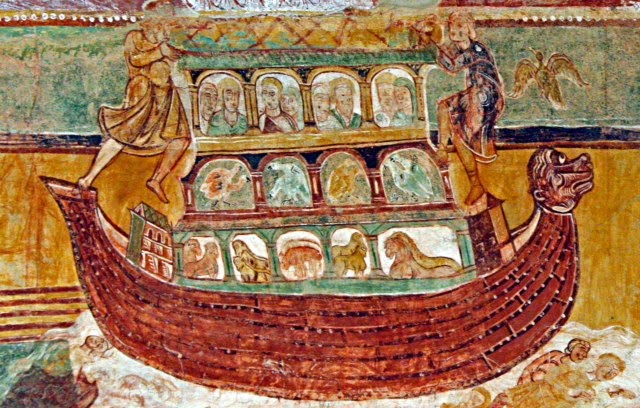
Noah’s Ark in the Earlier Middle Ages
Professor Brigitte Resl
Dean of Faculty of Arts and Social Sciences
University of Hull


Venue: John Rylands Library, Deansgate

Non-Members are always welcome.

Sunday, 15 March 2015

The Brook Lecture in Middle English

Thursday, 16 April, 5.30pm
Christie Seminar Room, John Rylands Library, Deansgate, Manchester

Professor Stephanie Trigg
(University of Melbourne)

Changing Faces: The Dynamics of Facial Expression and Emotion in Middle English Literature

The Brook Lecture, part of the English and American Studies seminar series, honours the memory of G.L. Brook, Professor of English Language and Medieval English Literature at Manchester University, 1945–77. We are pleased to welcome as this year’s speaker Stephanie Trigg. Professor Trigg is the author of Shame and Honour: A Vulgar History of the Order of the Garter (2012), Congenial Souls: Reading Chaucer from Medieval to Postmodern (2002), and many articles. She is one of the Program Leaders of the Australian Research Council-funded Centre of Excellence for the History of Emotions.

Enquiries: David Matthews

Monday, 7 April 2014

The Brook Lecture in Middle English

Prof. Andrew James Johnston (Freie Universität, Berlin)

Chaucer’s Postcolonial Renaissance


Thursday, 1 May, 5.30pm
John Rylands Library, Christie Seminar Room, Deansgate, Manchester

The Brook Lecture, part of the English and American Studies seminar series, honours the memory of G.L. Brook, Professor of English Language and Medieval English Literature at Manchester University, 1945–77. We are pleased to welcome as this year’s speaker Andrew James Johnston. Professor Johnston is the author of Robin Hood: Geschichte einer Legende (2013), Performing the Middle Ages from Beowulf to Othello (2008) and Clerks and Courtiers: Chaucer, Late Middle English Literature and the State Formation Process (2001), as well as of many articles and two novels.

Enquiries: Contact David Matthews

Wednesday, 19 February 2014

Events at the University of Manchester

Some upcoming events at the University of Manchester that may be of interest to medievalists...

Wednesday 26th February 2014
5.15pm, 4.05 Mansfield Cooper

Art History Visual Studies Seminar Series 2013/4
Pilkington Visiting Lecturer

Horst Bredekamp, Professor of Art History (Humboldt University, Berlin): Charlemagne and the Image Politics of the Body

Monday 3rd March 2014
6pm, Historic Reading Room, John Rylands Library Deansgate

The Toller Lecture
Professor John Hines (University of Cardiff): A New Chronology and New Agenda: The Problematic Sixth Century

Followed by a free wine reception, and then dinner (at own expense). If you wish to attend the post-lecture dinner, please book by Monday 24th February with Gale Owen-Crocker.

Tuesday 15th - Thursday 17th April 2014
Hulme Hall

Registrations are now being taken for the MANCASS Easter Conference 2014 on Womanhood in Anglo-Saxon England. Programme and enrolment information is available from Brian Schneider.

Sunday, 9 February 2014

John Rylands Medieval Research Seminar

(including information on Manchester Medieval Society lectures)

Semester 2, 2013-2014

February 6th 2014 – John Rylands Medieval Research Seminar (5.30pm) Professor Gale Owen-Crocker, English, University of Manchester, ‘The significance of the Bayeux Tapestry’ (Venue: John Rylands Library Deansgate, Christie Seminar Room)

February 20th 2014 - Manchester Medieval Society Lecture (6.00pm) Professor Maria Hayward, Southampton University, ‘Merchants and Makers: An analysis of the suppliers named in Great Wardrobe accounts of Henry VII and Henry VIII’ (Venue: Samuel Alexander A112, University of Manchester)

March 6th 2014 – John Rylands Medieval Research Seminar (5.30pm) Dr Charles Insley, History, University of Manchester, ‘Ottonians with Pipe Rolls? Kingship and symbolic action in the kingdom of the English’ (Venue: John Rylands Library Deansgate, Christie Seminar Room)

March 20th 2014 – John Rylands Medieval Research Seminar (5.30pm) Dr Georg Christ, History, University of Manchester, ‘Age of Empire: Information and knowledge management in the Venetian and Mamluk empires during the fifteenth century’ (Venue: Samuel Alexander A112, University of Manchester)

April 3rd 2014 - Manchester Medieval Society/MANCASS Lecture (6.00pm) Kevin Leahy, University of Leicester, ‘New Finds of the Staffordshire Hoard’ (Venue: TBC)

May 1st 2014 - John Rylands Medieval Research Seminar/Brook Lecture (5.30pm) Professor Andrew James Johnston, Freie Universitaet Berlin, ‘Chaucer's Postcolonial Renaissance’ (Venue: John Rylands Library Deansgate, Christie Seminar Room)

Supported by the John Rylands Research Institute

Tuesday, 12 November 2013

John Rylands Medieval Research Seminars, Semester 1, 2013-2014

All seminars start at 5.30pm and are held in the John Rylands Library, Deansgate

Thursday September 26: Stephen J. Milner (Serena Professor of Italian, Manchester), ‘The renaissance of medieval classicism in Italy: from manuscript to book’. *NB This seminar is in Samuel Alexander S 2.8

Thursday October 24: Cordelia Warr (Art History and Visual Studies, Manchester), 'The devil on my tail: Clothing and medieval visual culture in the Camposanto Last Judgement, Pisa'. Christie Seminar Room.

Thursday November 7: Katy Dutton (Leverhulme Early Career Fellow, History), 'Aspects of political culture in twelfth-century Anjou'. Christie Seminar Room.

Thursday November 21: David Matthews (English, American Studies, and Creative Writing), 'Dark and unlearned times: literature, print, and periodization between medieval and renaissance'. Bible Room.

Thursday December 5: Helen Fulton (Professor of Medieval Literature, University of York), 'City and Power: The Middle English Seege or Batayle of Troy'. Christie Seminar Room.

Supported by the John Rylands Research Institute.

Monday, 23 September 2013

MANCASS News and Programme 2013-14

New publications from the Manchester Centre for Anglo-Saxon Studies:

- Nicholas J. Higham and Martin Ryan, The Anglo-Saxon World, London, Yale University Press, 2013.
- Nicholas J. Higham ed., Wilfrid: Abbot, Bishop, Saint, Donington, Shaun Tyas, 2013.
- Gale R. Owen-Crocker and Brian W. Schneider, ed., Royal Authority in Anglo-Saxon England, Oxford, Archaeopress, BAR British Series 584, 2013.
- Gale R. Owen-Crocker and Brian W. Schneider, ed., Kingship, Legislation and Power in Anglo-Saxon England, Publications of the Manchester Centre for Anglo-Saxon Studies Volume 13, Woodbridge, Boydell, 2013.

Talks and conferences 2013-14
After ordinary meetings members are welcome to join the Director and the speaker for dinner at their own expense.

Monday 30 September 2013
5pm, Samuel Alexander Building Room S. 1.7
Dr Rory Naismith, of the University of Cambridge, will speak on ‘The Forum Hoard of Anglo-Saxon Coins’

Monday 11 November 2013
5pm, room to be announced
Dr Susan Youngs, formerly of the British Museum, will speak on ‘The Prince and the Hanging-bowl: the British presence at Prittlewell’

Monday 10 Feb 2014
5pm, room to be announced
Dr David Woodman, of the University of Cambridge, will speak on ‘The writing of history in twelfth-century Worcester’

Monday 3 March 2014: The Toller Lecture
Professor John Hines, University of Cardiff, will speak on ‘A new chronology and new agenda: the problematic sixth century’ exploring the issues raised by the recent high-precision radio-carbon dating project; 6pm, in the Historic Reading Room, John Rylands Library Deansgate, followed by a free wine reception, followed by dinner at Pesto, Deansgate (about £25 per person). If you wish to attend the post-lecture dinner please book by Monday 24 Feb 2013 with Gale Owen-Crocker.

Thursday 3 April 2014: Joint meeting of MANCASS and the Manchester Medieval Society
Dr Kevin Leahy, of the Portable Antiquities Scheme, will speak on ‘The Staffordshire Hoard’; 6pm in the Historic Reading Room, John Rylands Library Deansgate. If you wish to attend the post-lecture dinner please book by Thursday 27 March 2014 with Susan Thompson.

15-17 April 2014
The MANCASS Easter Conference on ‘Womanhood in Anglo-Saxon England’ will take place at Hulme Hall, The University of Manchester. The Conference will be directed by Professor Gale R. Owen-Crocker, The University of Manchester, in association with Dr Charles Insley, The University of Manchester, and Dr Christine Rauer, University of St Andrews. Offers of 20 minute papers should be submitted, with a short abstract, to Gale Owen-Crocker by 30 November 2013. Registration enquiries should be directed to Brian Schneider.

Tuesday, 19 February 2013

Seminar: Private Books for Educational Use - the Formation of the Northern Congregational College Library

Tuesday 26 February 5.15-6.45pm

Demonstration of a new digital resource charting how early nonconformist readers in Lancashire and Yorkshire interacted with their books.

Speakers: Dr Ben Bankhurst (Queen Mary, University of London), Dr Rachel Eckersley (Queen Mary, University of London), Ed Potten (Cambridge University Library)

The Northern Congregational College Project will make available in digital form the Catalogue of the Library of the Lancashire Independent College, Manchester (1885) and details of the 2,400 surviving books from the library of the Northern Congregational College, formed in 1958 from the amalgamation of two major Congregational colleges founded in the nineteenth century, Lancashire Independent College and Yorkshire United Independent College. In 1984 the Northern Congregational College became Northern College (United Reformed and Congregational). Most such libraries were founded on private collections and supplemented over generations through bequest and donation. Selected books were acquired in 1975/6 by the The John Rylands Library. These books, dating from the seventeenth to the nineteenth centuries, are unusually rich in provenance and evidence of use. Perhaps most interesting are the marks of ownership and use of the everyday reader – men and women who owned only a handful of books and whose annotations are the only evidence of their interaction with them.

The details, including high-resolution images of bookplates, inscriptions and annotations, will be published on Dissenting Academies Online: Virtual Library System, a union catalogue which represents the holdings and loans of selected Baptist, Congregational, and Presbyterian/Unitarian academies in England in the eighteenth and nineteenth centuries, and which forms part of the ongoing Dissenting Academies Project. The Virtual Library System will be introduced by Professor Isabel Rivers (Queen Mary, University of London) and Dr David Wykes (Dr Williams’s Library, London).

Booking is essential, please contact our Customer Services Team on 0161 306 0555 or via email.